February 2

Adult Education: More than a Second Chance

Adult Education2 More than a Second Chance introduces the concept of mature student programs. These programs are provided to individuals who are over the age of 18 that wish to obtain their high school diploma, increase a mark in a specific subject area, or upgrade their overall skills. Often, these programs get referred to as a “second chance,” making the assumption that the adults enrolled in the program are there simply because they dropped out of high school. This is not always the case, and with the continual immigration of individuals into our country, Canada faces additional challenges with determining the level of education that these individuals must achieve to have their previous education equated to that of Canada’s.

In my teaching experiences, I have worked with diverse populations in various settings. At Essential Skills Upgrading in Kitchener, I worked with adults with a number of cultural, language, racial, and socio-economic differences. Essential Skills Upgrading is an adult learning centre, with many of the individuals using the centre to work towards entering into college or writing their GED. At ESU, the students learn in a classroom setting with other adult learners. However, since each student attends the program to achieve a different goal, they tend to work on their own lessons at their own pace.
Adult Education3During my orientation, the teachers at the program explained to me that these individuals typically have a lower self-esteem, especially because they are adults who did not do well in school in the past or they have recently been laid off. Therefore, the teachers make the conscious effort to call these individuals “learners” rather than “students”. It was explained that many of the learners are currently using the centre because they did not have positive experiences with the education system in the pass, thus leading them to do poorly in school, be truant, or drop out. Therefore, the use of the word “learner” is to remove that negative mindset, boost their morale and self-esteem, and ultimately allow them to do better in school.

While working with one of the learners at Essential Skills Upgrading, she opened up to me about her life and the struggles that she has gone through. She explained to me that her and her family lived in Palestine for a number of years before coming to Canada. She was a teacher in Palestine, teaching the Arabic language to young elementary school students. The learner told me that her life turned around when the war in Iraq began. She was afraid to put her three children in school in fear that they would be unsafe. Finally, in 2008, she immigrated her family to Canada to start a new life. Since her education was not recognized at an equal level in Canada, she must attend the program to upgrade her education.

This just goes to show that we cannot buy into the specific viewpoints that surrounds the adult education sector. Everyone has a story and each person is working towards their own end goal. We must be supportive in every venture that a student takes.

Adult Education

January 15

Poetry: An Insight Into A Student’s Soul

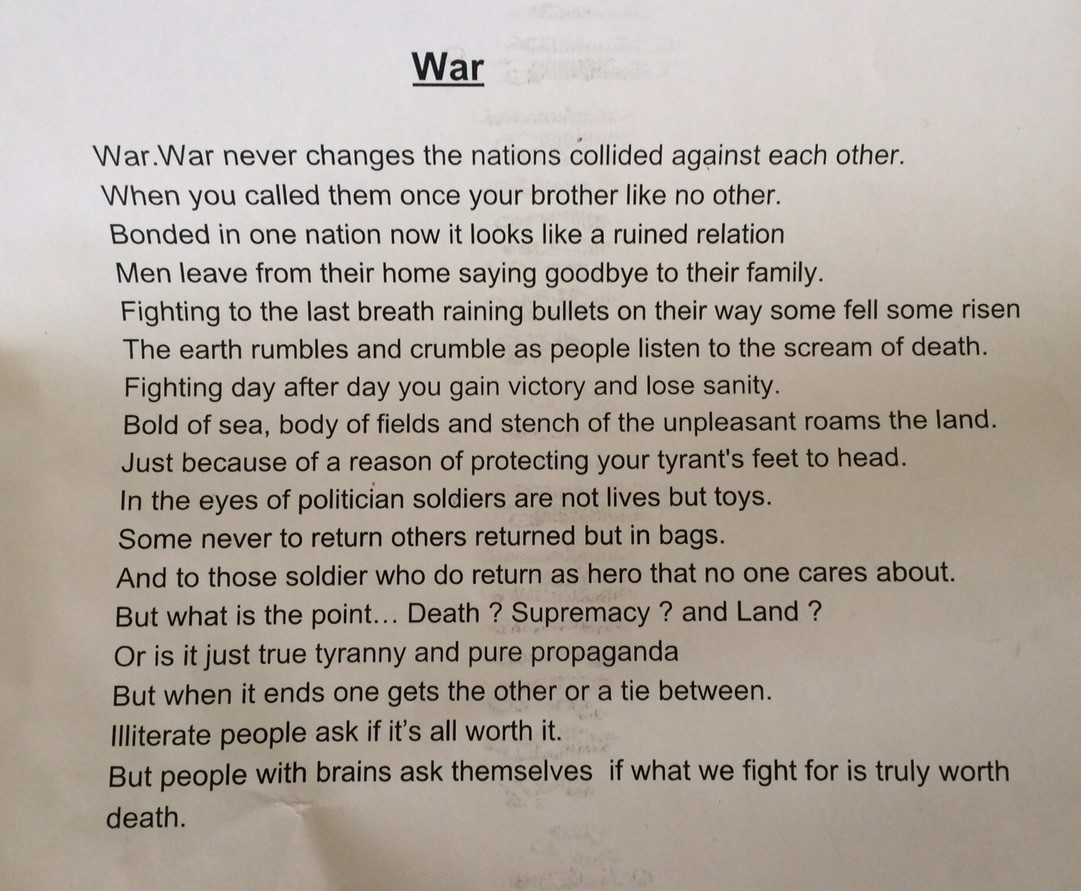
There’s a big push in our society to “talk to someone” to solve every difficult situation that you are experiencing. While this has great merit and has produced so much positivity, there’s something to say about a child’s ability to portray themselves in ways we don’t expect at their age. Even at such a young age, students have experienced situations that we as adults may have never encountered.

I am currently student teaching at an urban school in Ottawa, Ontario. The students come from all different backgrounds and experiences, which makes for a dynamic learning environment. At the conclusion of our poetry unit, students were instructed to write a poem demonstrating their best literary ability. Students had the freedom to choose the topic and structure of their poems, allowing their full creativity to flow! The only restriction was that their poetry must be respectful to everyone.

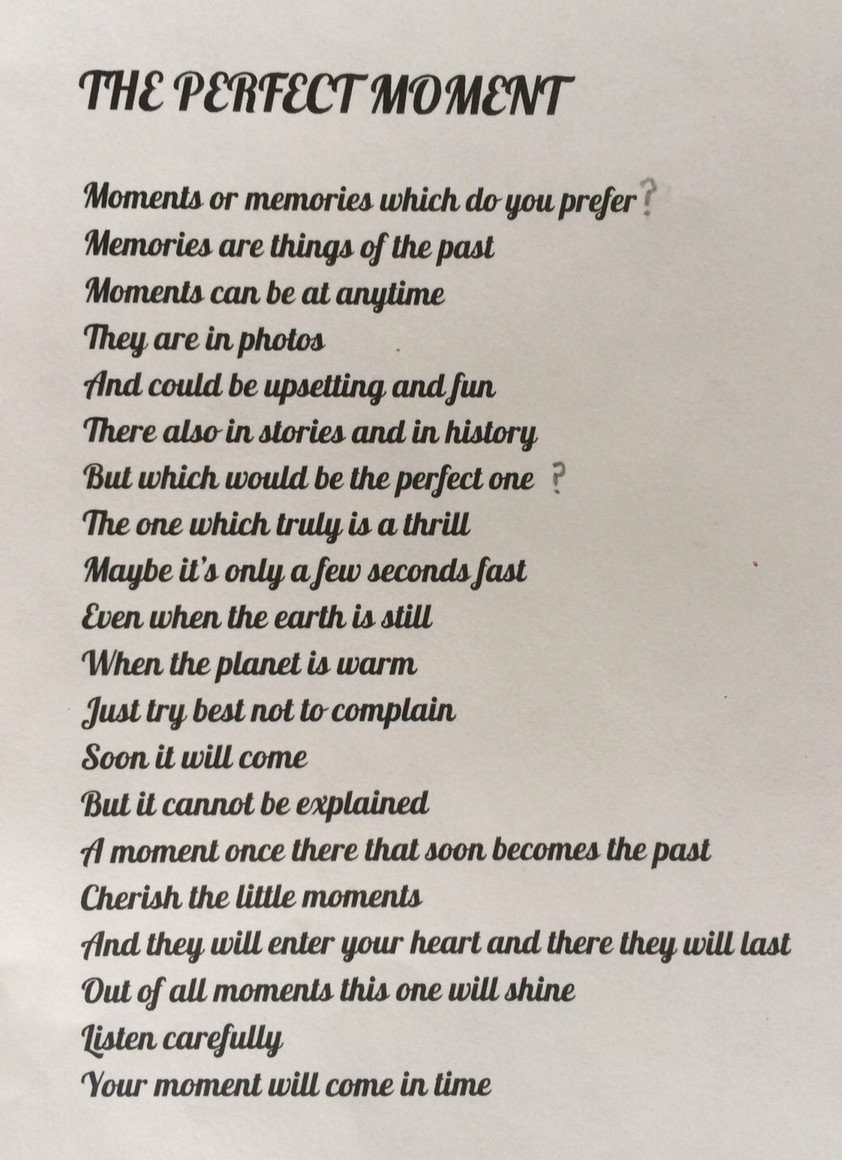
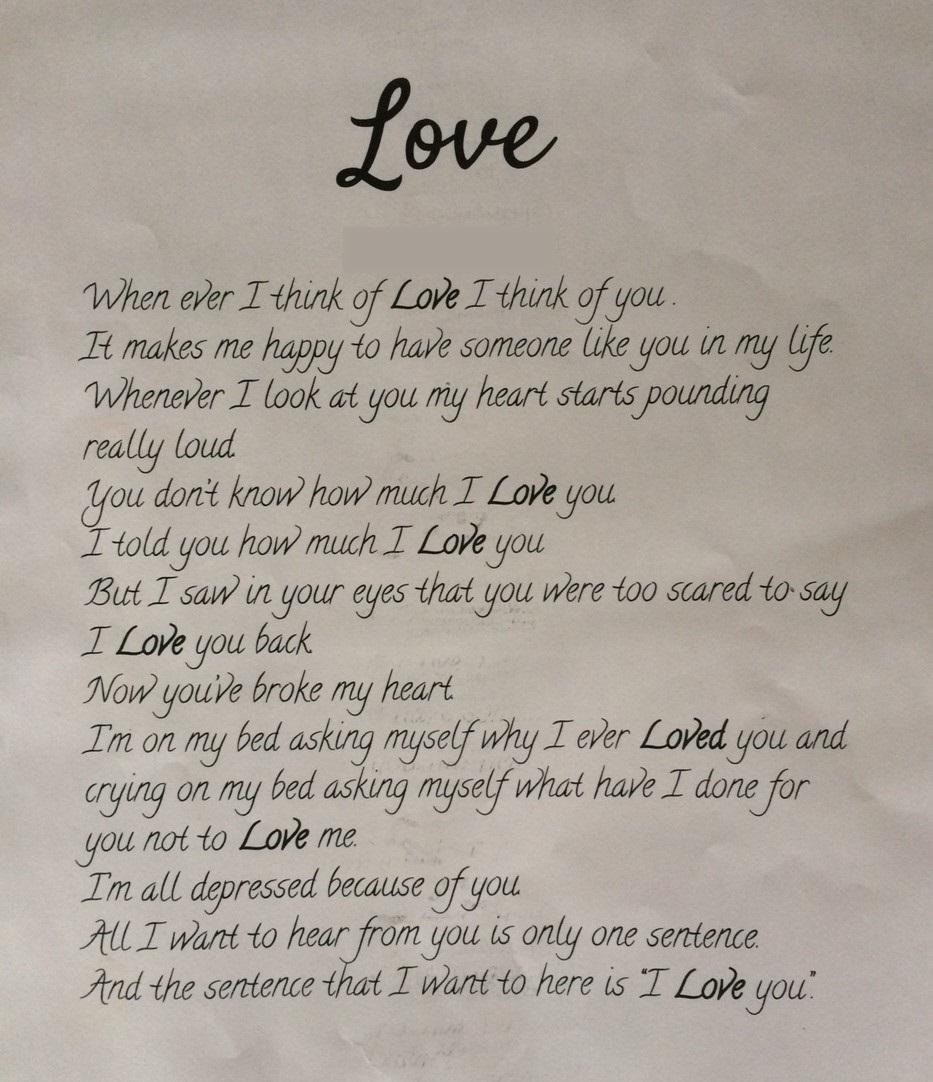
There were a few pieces of student work that I just had to share.

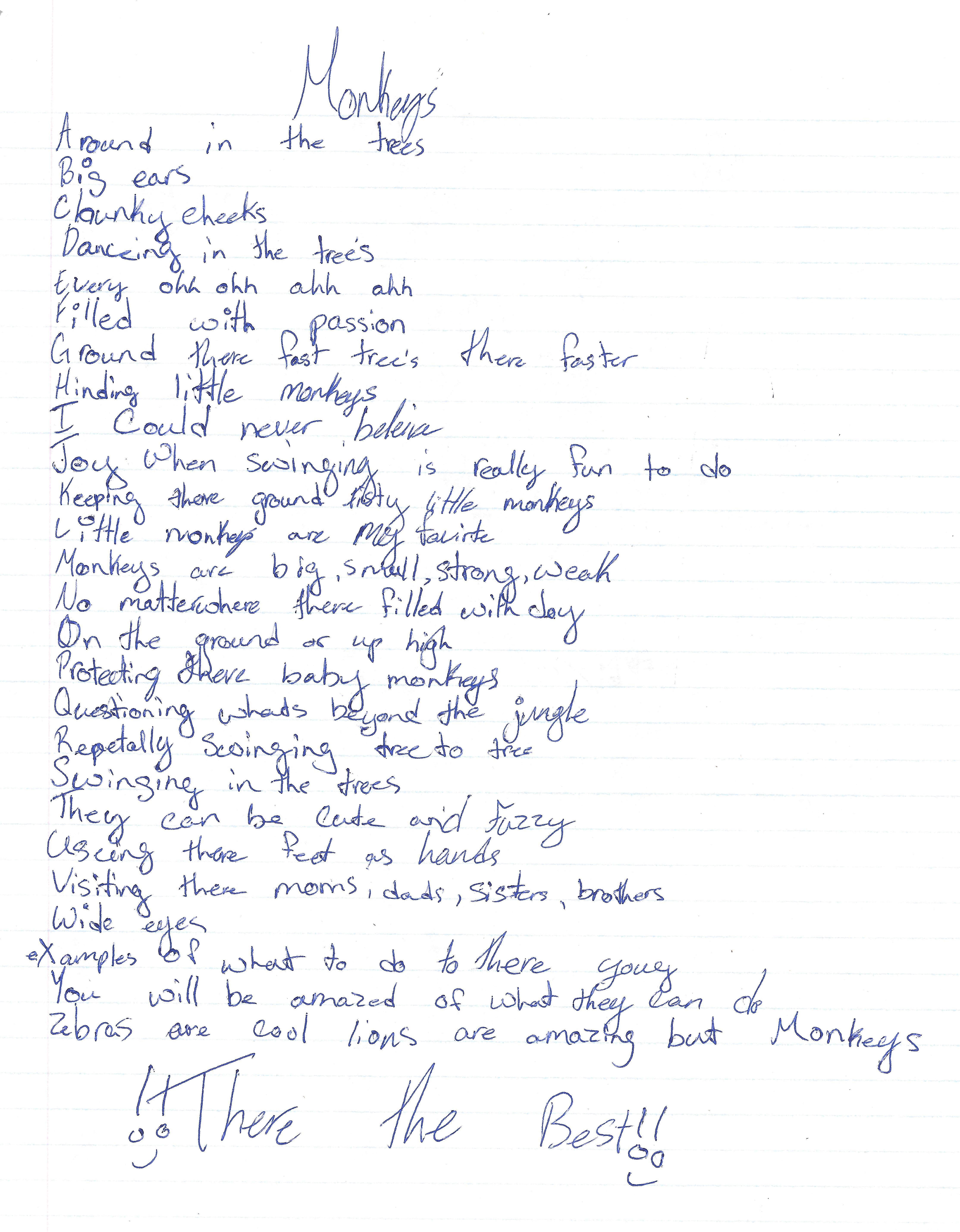
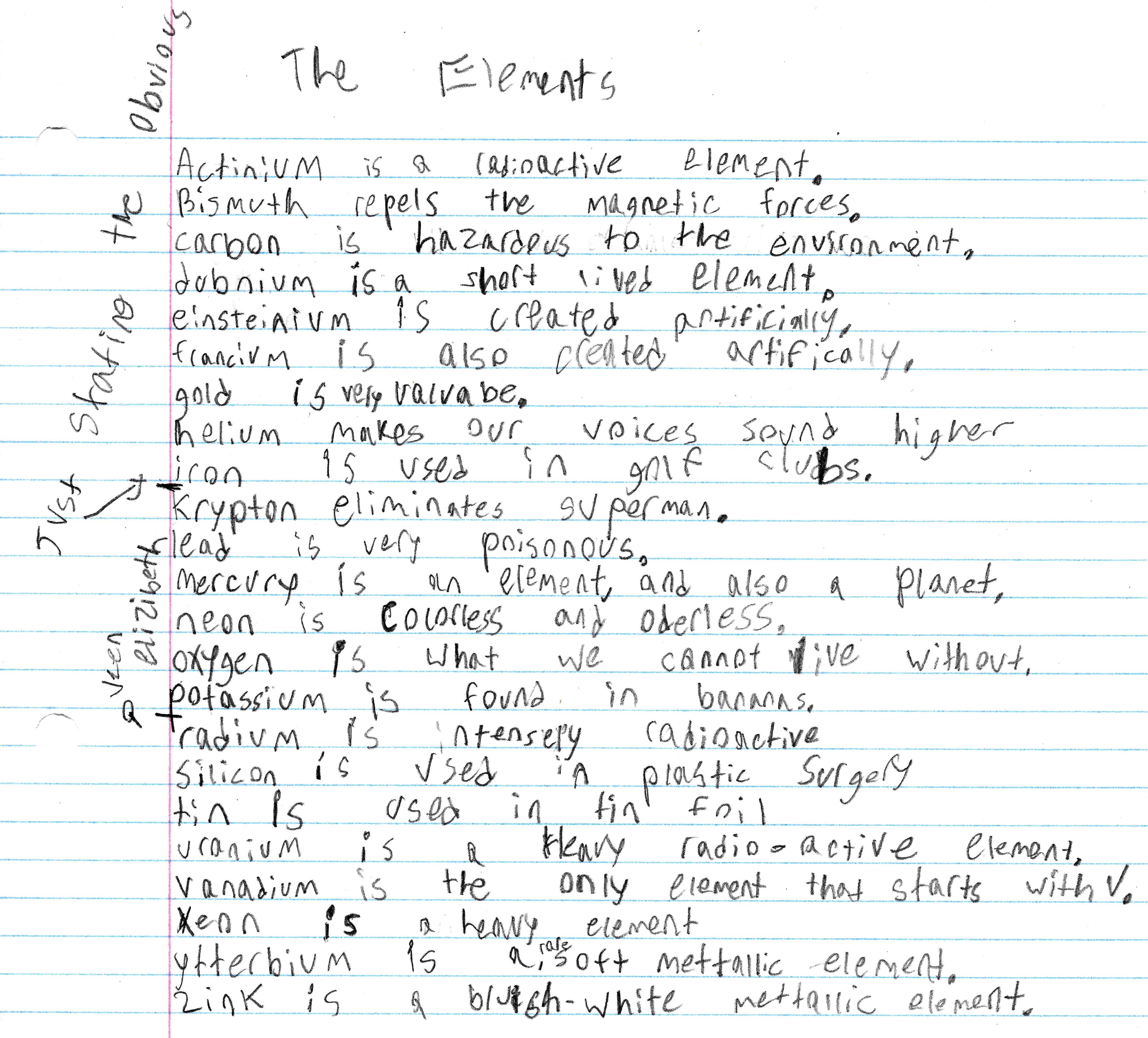
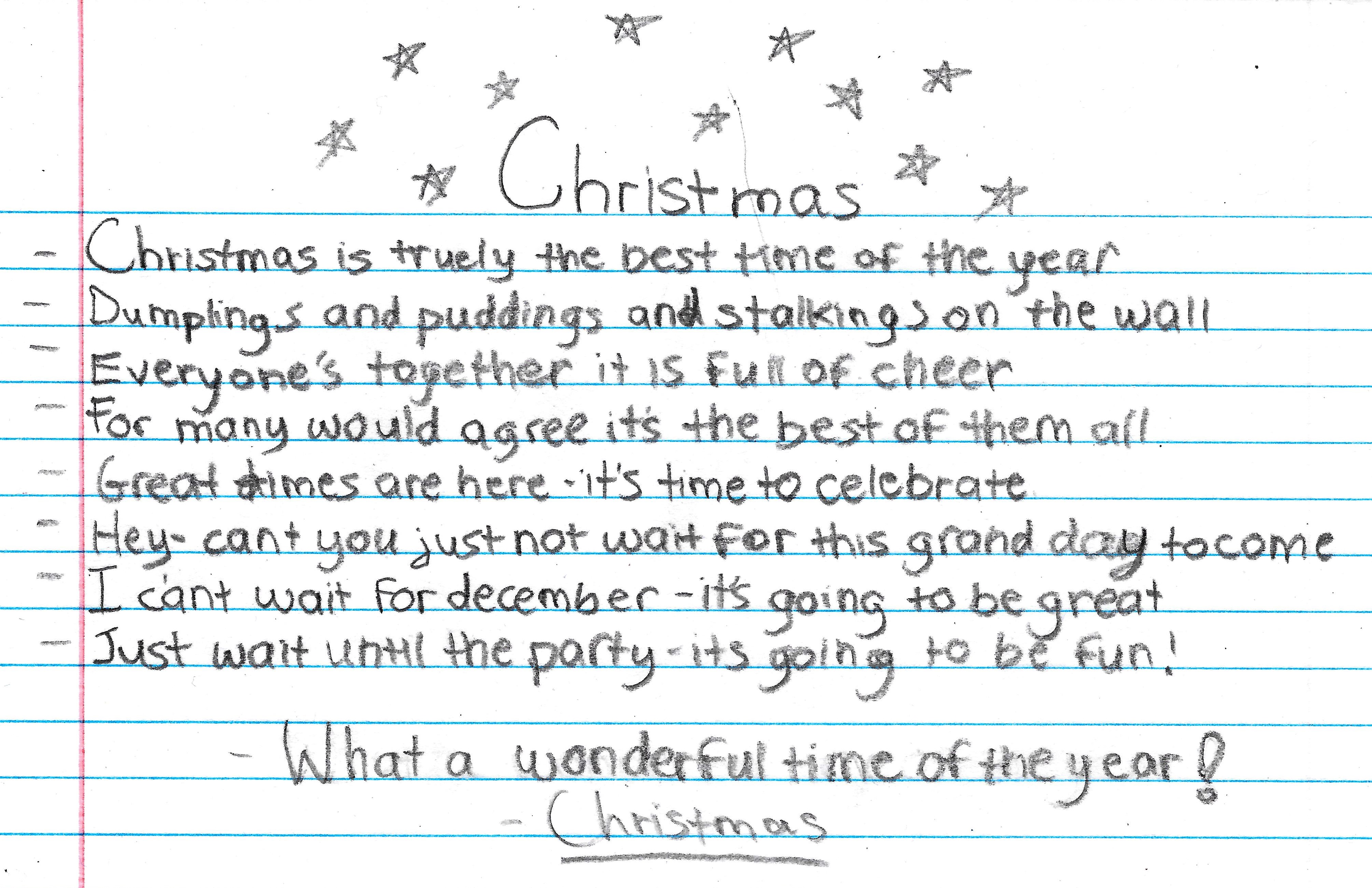
Poem1 Poem2 Poem3 Poem5Poem4

True works of art. Was all the spelling correct? No. Did the students use proper punctuation? Not always. Did the students demonstrate an ability to portray a feeling in a descriptive way? Absolutely. While I used to think of poetry as boring and redundant, I now view poetry as an insight into a student’s soul.

January 13

Graphic Organizers

These things are KEY…

Often, students get into a rut of receiving the same grade over and over again. They are quick to see a trend in what they are accomplishing and end up settling for that mark as their goal. But how can students excel past their normal quality of work without receiving a little guidance from the teacher? How can a teacher help a student go from a level 3 to a level 4 while also offering differentiation to students who are not even reaching a level 3?

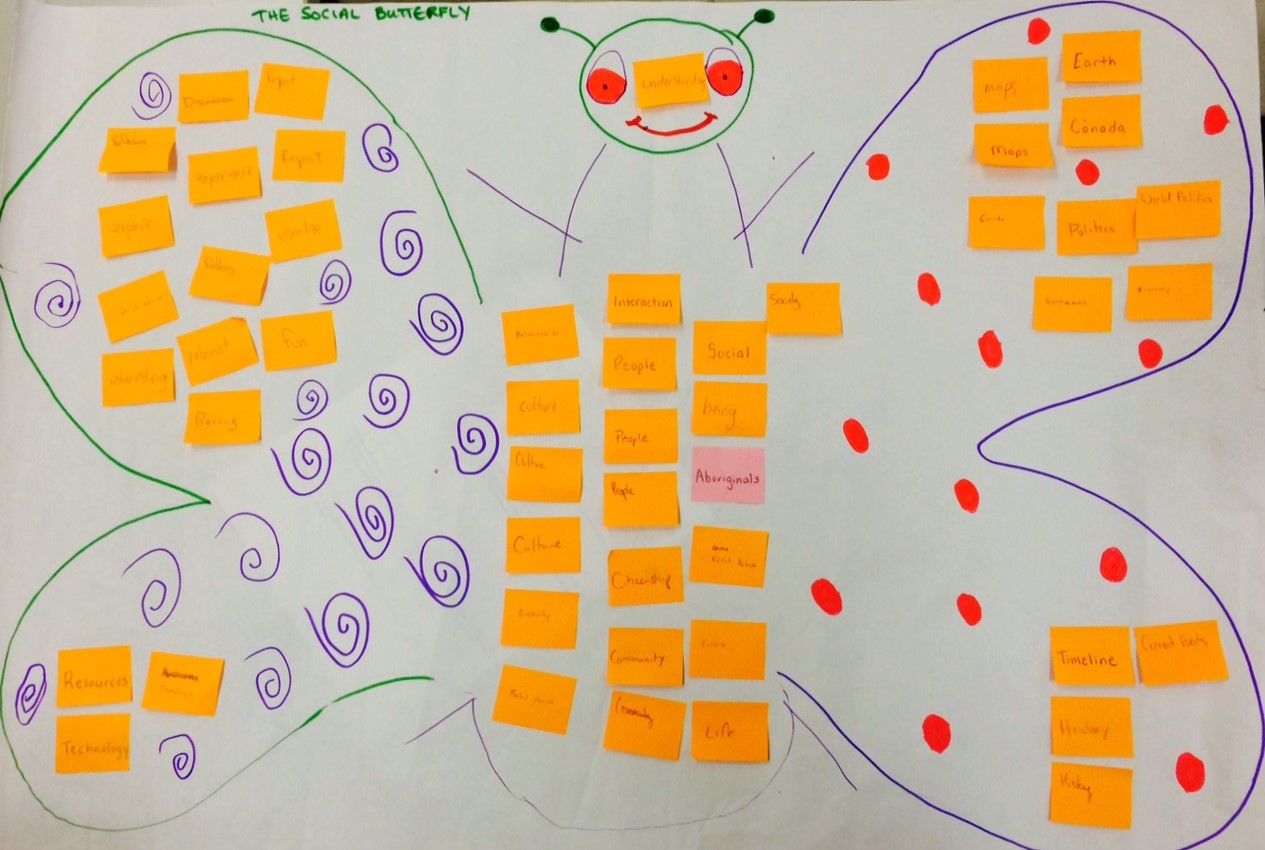
Graphic organizers help students classify ideas and communicate more effectively, which help students achieve that next-level quality of work. The many uses of graphic organizers include structure writing projects, help in problem solving, decision making, studying, planning research and brainstorming. These organizers provide students with the opportunity to transfer ideas from their minds down to paper while also writing them in structured, yet creative, ways. Most importantly, they’re FUN!

Here is an example of a graphic organizer that I created with some fellow teacher candidates in our Social Studies course:

Graphic Organizer

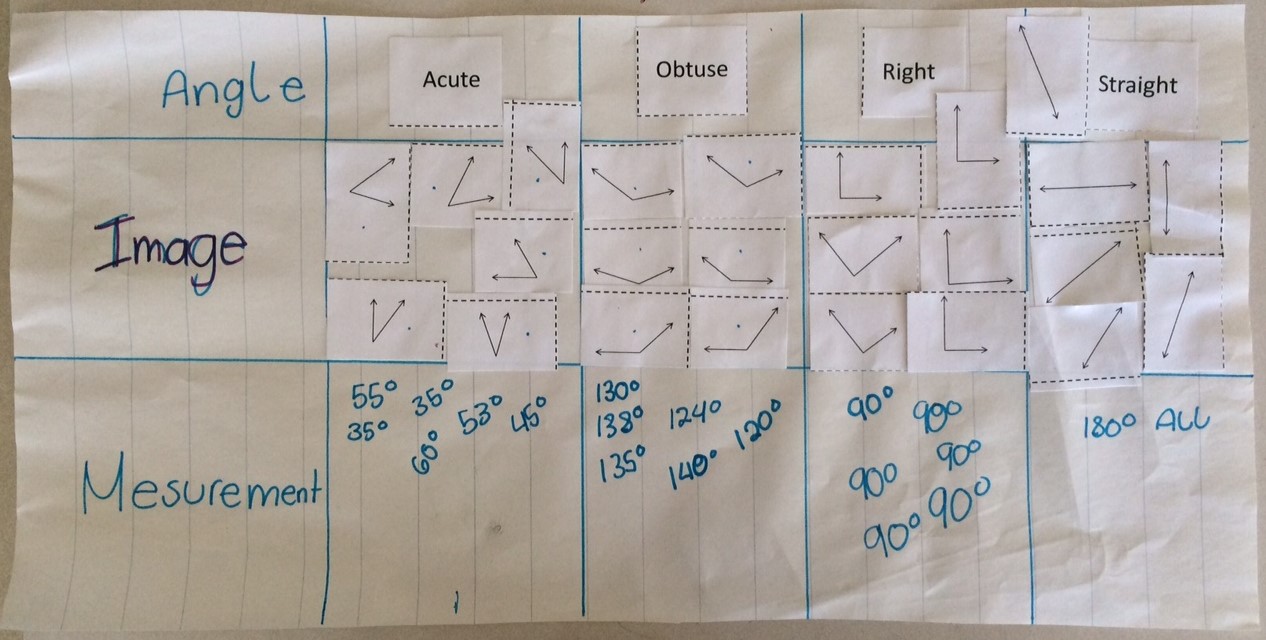
In Math class today, I had my students a chart-based graphic organizer about various types of angles:

Graphic Organizer2
Graphic organizers can be used in every subject and are a great learning activity for students. Try them; they might just become your favourite thing!


December 14

The Importance of a Positive Self-Image

Last week, there was a student that came in after recess and looked visible distraught. I motioned for him to come over to my desk and proceeded to ask him if everything was alright. At the drop of a dime, he started to cry. I took him out into the hall and let him tell me what was going on. He talked about how he got bullied during recess and the most hurtful comments were the ones directed at his weight.

This whole situation was very alarming for me, for a few reasons. This was one of the first experiences I had on the teacher’s side of bullying; that of counseling a student that was negatively impacted by their peers. This put bullying into the forefront for me as a teacher, especially as I reflected on some of the bullying I experienced at the same age as this student. Alternatively, the idea that comments about this student’s weight were more harmful than those directed at his character left me with a few questions.

Self-image may consist of three types:

  1. Self-image resulting from how the individual sees himself or herself.
  2. Self-image resulting from how others see the individual.
  3. Self-image resulting from how the individual perceives others see him or her.

Fostering a positive self-image is an important thing for everyone, students included. We need to realize that the negative things that people say about us should not be internalized, potentially replacing the positive aspects of our character. What that being said, I created an activity that centered around fostering a positive self-image and disregarding the negative things being said about us.

The activity started with a brief conversation about self-image, targeting areas such as what creates a positive self-image and why it is important. Each student then received a handout that looked like this:


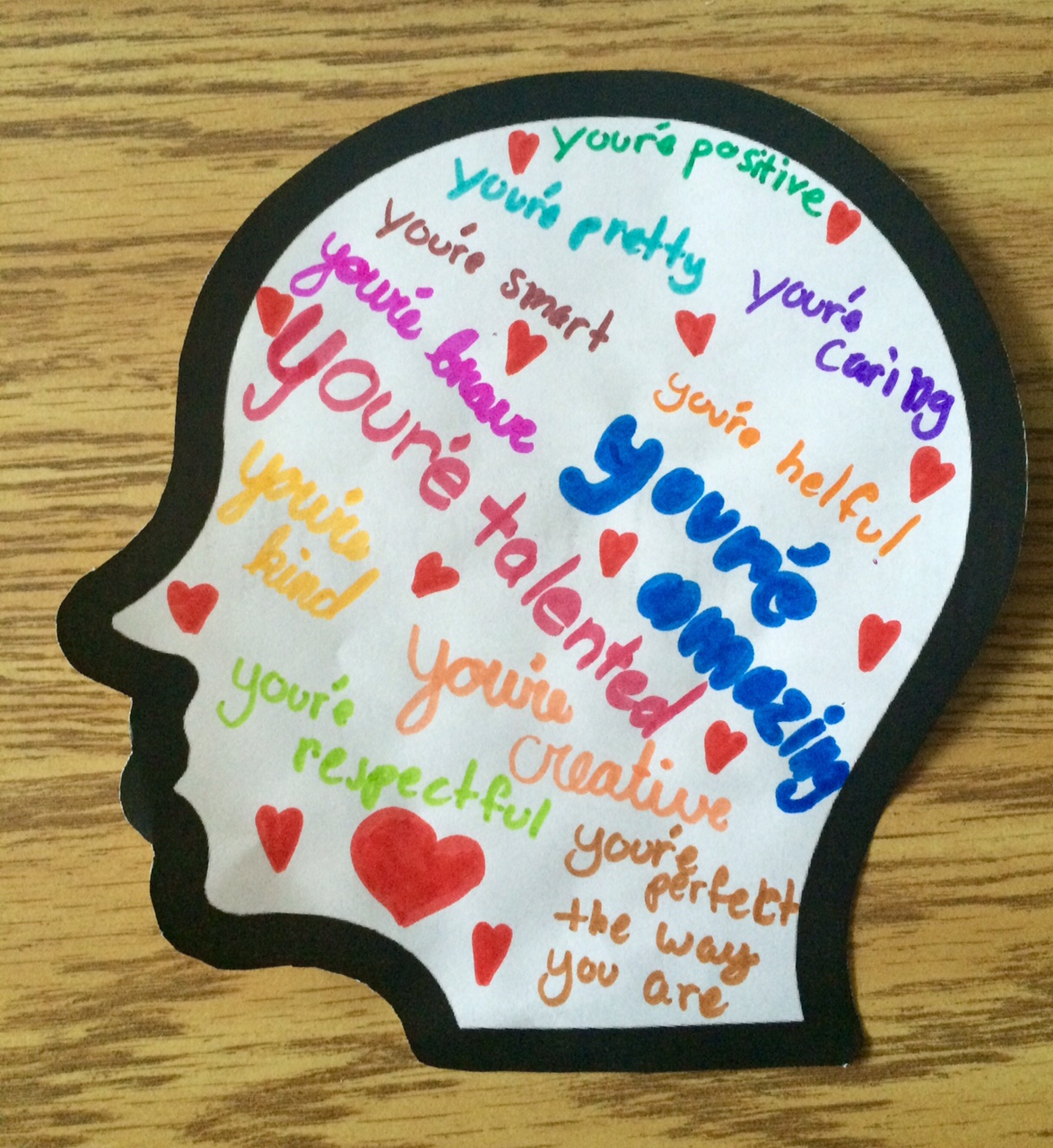
Each student was instructed to write any negative comments about themselves that they’ve been told. Some of these comments included words like “gross”, “ugly”, “stupid”, and “gay”. Next, students were told to write the positive aspects of themselves that they cherish. After a few minutes, students then cut along the outline of the person, removing all of the negative comments said about them. I placed the recycling bin in the middle of the classroom and students were allowed to rip up and throw away these nasty words. Students were left with a “positive self-image portrait” that outlined all the characteristics that truly have an impact on our lives, which is often clouded with all of the negativity present around us.

Here are just a few of the final products my students produced:

Self-Image (3)

Self-Image (1)

Self-Image (4)Self-Image (6) Self-Image (5)Self-Image (2)


The activity concluded with a video by Soul Pancake centered around the importance of giving compliments rather than spewing hate. This video definitely resonated with students, leaving a few in tears (happy ones of course)!

We can never truly know the impact that our words can have, positive or negative. But we must always strive to spread love rather than hate.

December 8

Field Trip to MacSkimming Outdoor Education Centre

Field Trip9
Today, I accompanied a group of grade 3 and 4 students to MacSkimming Outdoor Education Centre in Ottawa’s east end. This beautifully scenic education centre is located on over 40 acres of land! They provide high quality, hands-on outdoor programming that is designed and delivered to compliment classroom learning in many sections of the Ontario Curriculum. This trip was focused on the life of the pioneers! The students were introduced to the beauty of the natural world, as well as our place in it.

The day began in the central cabin, where many of the students ask the all-important question: Did those animals used to be alive? All I will say is that we had a great little introduction to the fur trade…

Field Trip1
After our initial gathering, we began a 5-station activity that introduced students to the many jobs that Canadian pioneers had to complete on a regular basis:

Field Trip2
1) Yoke and buckets for transporting water
Field Trip6
2) Mortar and pestle used to make flour and various medicines
Field Trip5
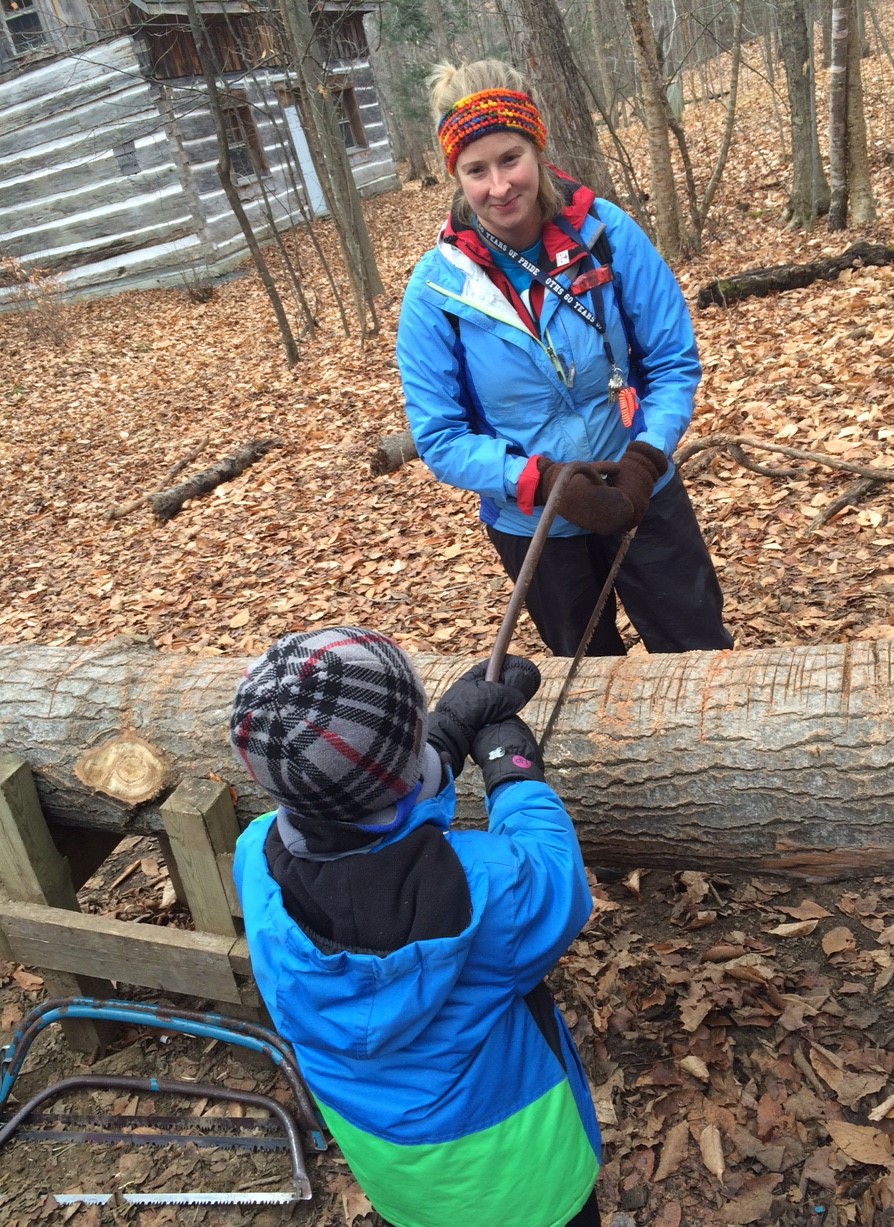
3) Two-person saw used to efficiently cut lumber
Field Trip4
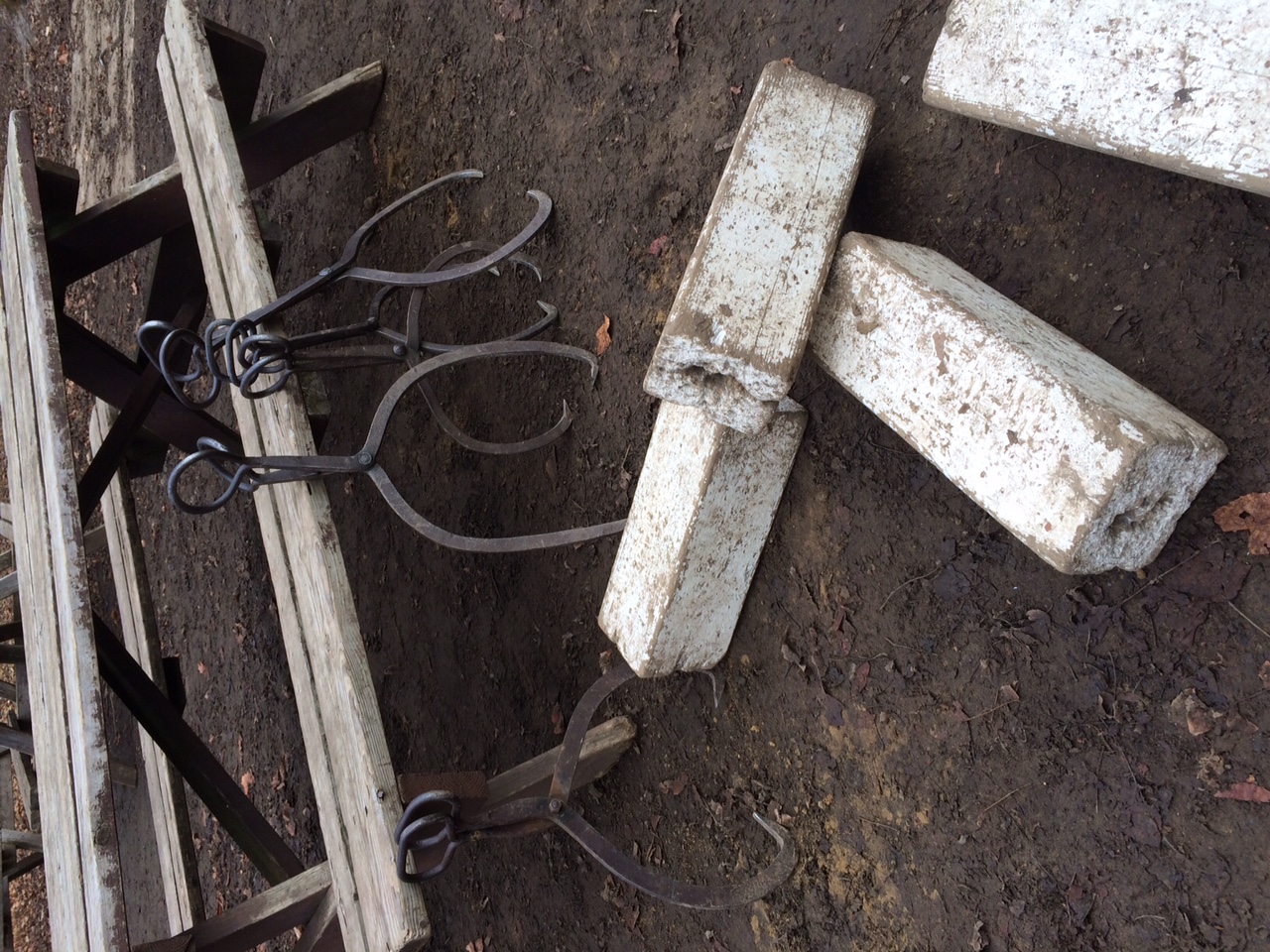
4) Device to carry blocks of ice
Field Trip3
5) Manual drill to tap for maple sap

Next, we all worked as a community to build a log cabin! Families from Spain, France, and England worked well together, proving that many hands make light work.

Field Trip7

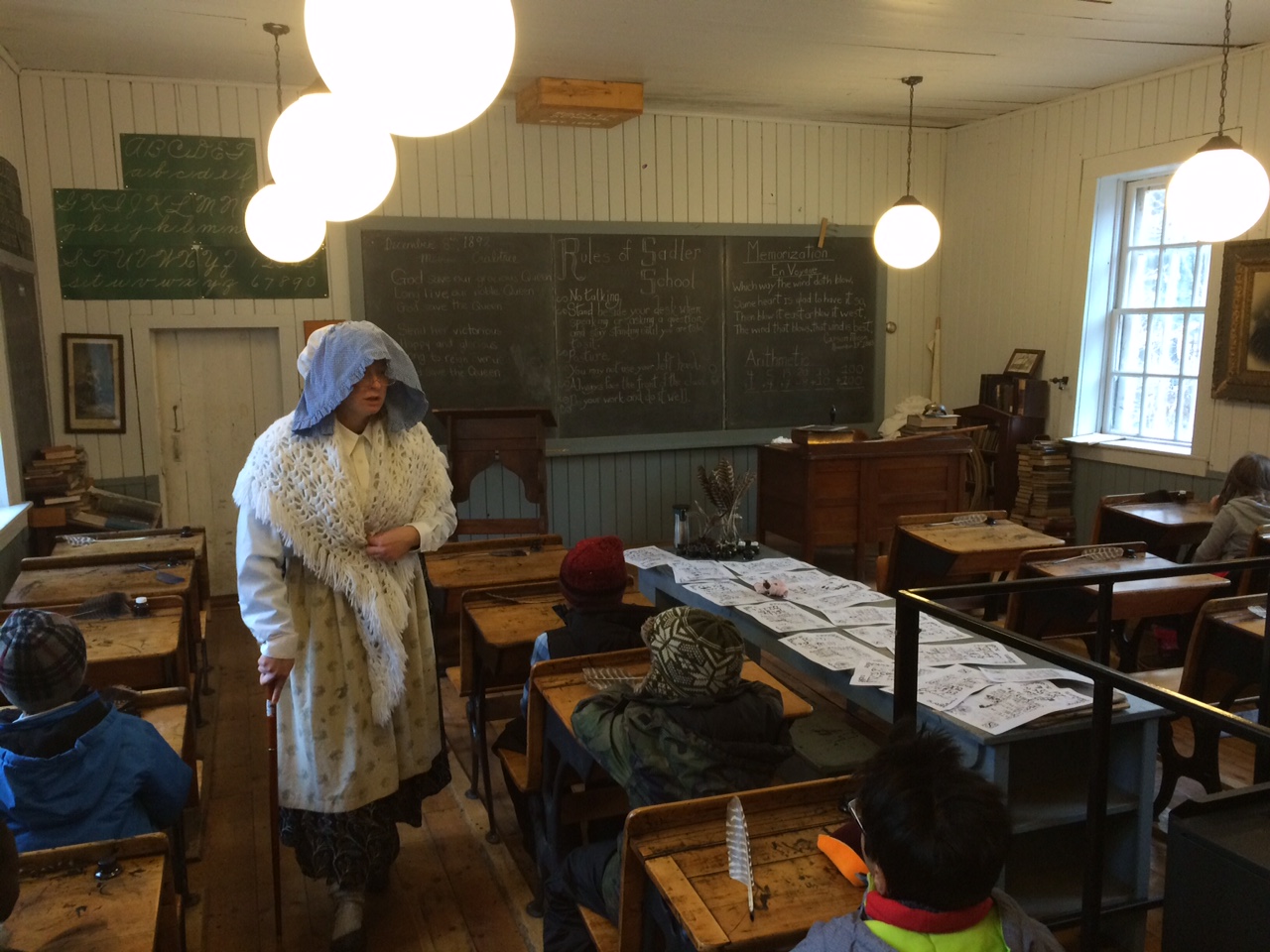
We ended the day by practicing our penmanship, memorization, arithmetic, and proper classroom behaviour, including writing with our right hands only (as was the case years ago). All of this occurred in a 1-room school house that was built in 1886! Mistress Crabbtree felt more like a drill sergeant than a teacher…

Field Trip8
Our day at MacSkimming Outdoor Education Centre was very educational and taught us just how fortunate we are to live in the world our ancestors worked so hard to create for us!

December 1

ABC Poems

Last week at my Community Service Learning placement, I lead a lesson for my grade 7 students about ABC Poems. —An ABC poem usually has 5 lines, but sometimes it is a little longer (which is great for differentiation!). Essentially, the poem has very few rules and restrictions except for the following 2:

  1. The first word of each line (1-4) is in alphabetical order from the first word (ex. G-J, P-S, etc.).
  2. —Line 5 is one sentence, beginning with any letter.

I instructed the students to choose a topic and brainstorm as many different things about the topic as possible. Next, the students chose a letter that they would use as the first letter of the first line. And was I surprised by the positive reception and amazing work from my students! What started as a simple writing strategy to introduce students to a different approach of poetry turned into something much greater. Some students decided to write from A-Z, while others combined two ABC Poems into one. The best part: the select few students who typically refuse to write or complete work were passionate about this activity and actually asked to perform their written piece to the rest of the class!

I definitely recommend this activity! Check out some of the final products below (Note: spelling, grammar, etc. was not assessed).

Scan5

Scan4

Scan3

Scan2

Scan1

November 30

Sponge Activities

Some of the most awkward moments in the classroom are caused by a lesson ending 10 minutes before it is supposed to. There are no worksheets to work on, no more topics to cover, and no more to review. These ten minutes can quickly turn into a 10-minute battle of trying to keep students in their seats and keeping their voices at a low level.

Sponge Activities
That’s where sponge activities come in! Theses activities are used to fill the last 5-10 minutes of class time with activities that will not only occupy the students, but will also challenge them to think critically. The following is a list of sponge activities suggested by Scholastic.com:

  • Play a guessing game that challenges individual students or teams of students to identify as many historical figures as they can in a set period of time. You can also play the game by asking students to identify countries, cities, bodies of water, plants, animals, vegetables, authors, fairy tale characters, weather conditions, cars, television shows, or movies. This game is easy to adapt to a particular content area, unit of study, or student interest.
  • Invite student groups to add the numbers in their phone numbers, ages of family members, or street addresses. The group with the highest score wins.
  • Go around the room and ask students to name foods, cities, countries, boys’ names, or girls’ names in A-B-C order. (For example: Asparagus, Beef, and Crepes; Albuquerque, Boston, Columbus; Argentina, Botswana, and Cambodia; Aisha, Brittany, and Camilla.)
  • Use the newspaper or a supermarket circular to create your own version of The Price Is Right. Ask questions such as “What costs more this week, a head of lettuce or three cucumbers?” “Do you think a mattress costs more or less than a cell phone?”
  • Challenge students to identify where various geographic locations (continents, countries, cities, landmarks, bodies of water, etc.) are on a large map. Provide clues as needed.
  • Have students figure out the distance between two cities on a map using the scale. Start with short distances and increase the distance as students get more proficient at doing the math and identifying locations.
  • Call out states and have students name the capital. Call out capitals and have students match them with the state.
  • Call out sports teams (baseball, football, hockey, etc.) and have students identify the city and state they play in.
  • Have students identify careers in which people wear uniforms. Have students identify as many careers as they can in a set amount of time.
  • Provide students with the monthly average rainfall and/or temperature in your city or state (or have them investigate). Then have them use these figures to determine the average total rainfall for the year and average temperature during each season of the year.
  • Challenge students to write acrostic poems for the main character in a story they are reading, a topic they are studying, a favorite subject, or special interest.
  • Play short versions of word games like Scattergories, Boggle, Taboo, and Password.
  • Write three related words on the board or overhead and have students figure out what they have in common. For example:
    • Bears, bats, stalactites (things you might find in a cave);
    • Brake, bell, chain (parts of a bike);
    • Fiction, mystery, biography (types of books/genres)
    • Los Angeles, San Francisco, Sacramento (cities in California); and
    • Niagara Falls, Grand Canyon, Redwood Forest (natural wonders).
  • Ask students to write down as many food items, animals, flowers/plants, boys’ names, girls’ names, colors, sports figures, historical figures, etc., that begin with a certain letter of the alphabet in two minutes. Use a timer. When time is up, work with the class to write a final list on the board. For example: broccoli, Brussels sprouts, beans, baloney, bagels, Boston cream pie, beef, barley, bell peppers, bok choy, or bread.
  • Tell students to list all the words they can using the letters in their last name, first name, a vocabulary word, month of the year, or day of the week.
  • Invite students to develop five quiz questions (with an answer sheet) and then exchange papers with their seatmates for an impromptu review.
  • Let students become critics and write or deliver quick reviews of recent movies, TV shows, video games, sports events, or restaurant/cafeteria meals.
  • Give individuals, pairs, or teams of students a chance to discuss the question “If you had $1,000 to donate to a worthy cause, what would it be and why?”
  • List five historical events on the board and ask students to put them in chronological order. Then ask them to list five important events in their personal history and put them in chronological order or on a time line.
  • Write a haiku about a favorite relative, holiday, hobby, emotion, or place.

What types of sponge activities do you find effective? Are there any others that you suggest trying?

November 29

Re-Situate “Curriculum”

FullSizeRender
Ayers (2010) presents the struggle that every teacher experiences throughout their entire career: Defining curriculum as a “means to” rather than an “end goal”. The curriculum outlines the important aspects of learning that students should demonstrate throughout each year of their education. However, we cannot allow this curriculum to be the only accepted learning in our classrooms.

Teamwork, initiative, responsibility, interpersonal relationships… these are all skills that are important aspects of learning that perhaps aren’t explicitly outlined in the curriculum. Also, what about the teachable moments that arise each and every day in our classrooms? Should we refuse to build on those, simply because they are not outlined in the curriculum? What if a student wants to solve a particular problem that is covered in a later grade? Should we delay this learning to ensure that everyone’s education is at the same pace?

Curriculum
As every educator should do, we must re-situate our initial understandings of “curriculum”. Ayers poses an number of interesting questions that guide his approach to implementing a curriculum:

  1. Are challenges from classroom to community fair game for investigation?
  2. Are there opportunities for discovery and surprise?
  3. Are students actively engaged with primary sources and hands on materials?
  4. Is productive work going on?
  5. Is the work linked to student questions or interests?
  6. Is work in my classroom pursued to its far limits?

There is so much more to student learning than what is outlined in the mandated curriculum. I am by no means “rebelling” against these documents; in fact, I place extremely value on these documents as they truly do guide teaching and learning. However, I do believe that we as teachers must do more than simply follow the curriculum. We must create these situations in which students can explore and learn to become efficient learners, rather than focusing all efforts on ensuring each students achieves every specific expectation outlined in their grade level.

curriculum

November 11

The Absolutely True Diary

Indian
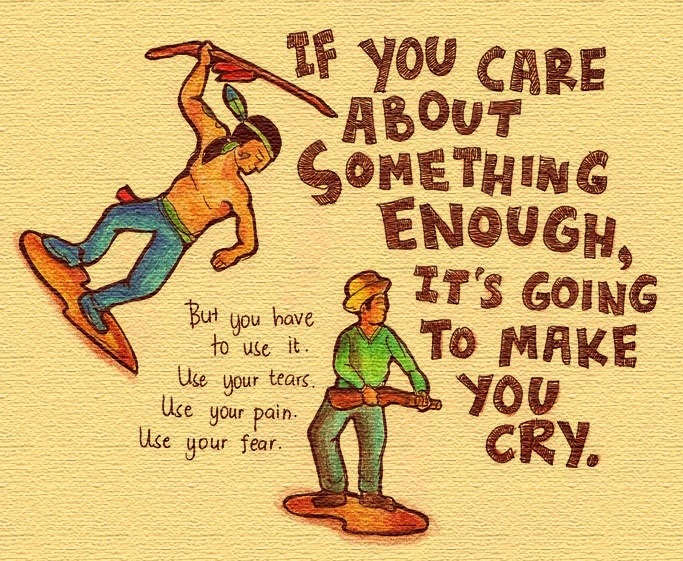
The Absolutely True Diary of a Part Time Indian tells the story of a fourteen-year old boy named Junior that lives on an Indian reserve in Washington. After getting in trouble at school for acting out over the age of the textbooks he was being given, he transferred to a school that is off the reserve. With the new schools comes a large culture shock; the students all seem to have money, their families ties are different than this own, and the way others behave does not always align with how he was raised. The story continues to share the story of his year at this new school and how it affects not only Junior, but his relationship with the reserve he came from.

Two strong themes were apparent in the novel: self-identity and alcoholism. Self-identity is how we define ourselves, referencing such themes as gender, academic performance, socio-economic status, and sexuality, among other factors. In Junior’s case, there were additional factors that played into his formation of an identity. Firstly, he had a number of medical deficiencies resulting from being born with hydrocephalus. Secondly, he was the only Indian student in a predominately white school. This caused him to internally battle with the juxtaposition of his two different personas: Indian at home and white at school.

Indian2
Forming a solid self-identity is difficult for any young adolescent, nonetheless a teen in Junior’s position. As teachers, we must ensure that we serve as a pivotal role model to our students during this period in their lives. We must ensure that we create an emotionally safe environment for all students. Themes of respect and inclusion will help to diminish hateful acts, which will allow the students to feel safe in their exploration of creating a self-identity.

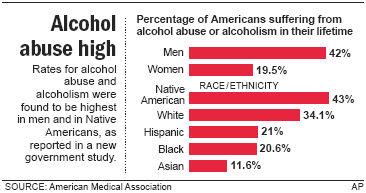
The second theme that stood out to me in this novel is that of alcoholism. Junior loses many family members to the effects of alcohol, which is a serious issue on Indian reserves:

Alcohol
There are a variety of reasons why alcoholism is heavily present on Indian reserves (poverty, history, etc.). No matter what the reason might be, it is important that this issue be addressed, even at young ages. Although alcohol and substance abuse education is one thing that can be done, there is a lot that can be done in the field of positive psychology and coping methods to reduce these statistics. By teaching students that there are ways other than alcohol to solve their problems, we can work towards creating a safer and better prepared generation on the reserves.

November 7

Safe Classroom Management

YouTube search: “Teacher gets in fight with student”

Results: “About 1,140,000 videos”

What is happening to our education system? How is this happening? Perhaps more importantly, why is this happening?

Safe Management (1)In the summer of 2015, I received my certification in Safe Management, which is a crisis intervention training program. This training help me immensely in my role of working with individuals that have varying disabilities, but little did I know just how relevant it could be to my future profession of teaching. More than anything, this training exposed me to the reality that at one point or another, we all can get agitated and act out, despite how we typically act on a regular basis. What is important about this is recognizing what is happening, why it is happening, and how to deescalate the situation.

This idea of recognizing what is happening is outlined in Safe Management’s Aggression Escalation Continuum (displayed below). There are four levels of aggression presented: subtle, escalating, imminent, and physical. At each of the four levels of aggression, appropriate responses are presented as an indicator of how best to deescalate the situation. While teachers may never experience being the target of physical aggression, it is important to understand what to do in those situations, especially since we are responsible for the safety of every other student in the classroom.

Safe Management (3)
The Safe Management training further defined each of the aggression behaviours by providing examples of the verbal, psychological, and gross motor indicators associated with each stage of the aggression. And they didn’t stop there. They also provided the appropriate staff response to each of those behaviours.

Safe Management (4) Safe Management (5)

However, there is more to creating a safe classroom environment than just preventing aggression. The training covered many important topics other than aggression; risk management, relationship management, behaviour management, and physical intervention concepts were discussed as well. The chart below addresses topics relating to relationship management, while presenting strategies and techniques to successfully achieve the outlined principles:

Safe Management (2)
There are so many different approaches that teachers can take to addressing a student acting out, and it doesn’t always have to lead to a power struggle. While some teachers choose the humiliation method of addressing student behaviour, there are a number of reasons why this method is damaging to students. There is a great article on Edutopia that discusses student humiliation. Through further research on the topic of classroom management, I came across a number of useful resources. Edutopia had an entire database designated to classroom management resources.

I must say, the best resource I came across was from the Crisis Prevention Institute (CPI). CPI has a program that is very similar to Safe Management entitled Non-Violent Crisis Intervention. They constructed a manual especially for teachers called “Remain Calm & Respond Right When A Student Challenges!“. I strongly recommend that teachers and Bachelor of Education students should check it out!

Ideally, students will enter our classrooms each and every day with a positive attitude and an eagerness to learn. However, if it means that I get to keep myself safe while also keeping my students safe, then I will learn about as much classroom management as possible.